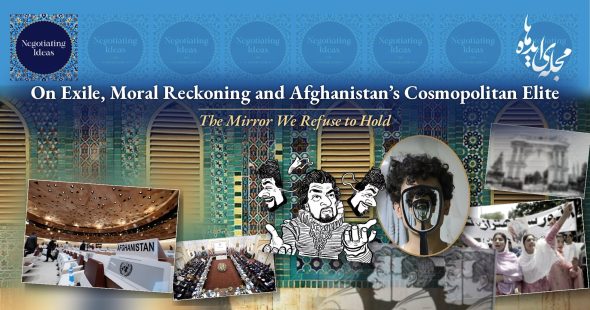
The Mirror We Refuse to Hold There is a particular kind of comfort in waiting. For many of us — the Afghan professionals, civil society leaders, journalists, academics, and activists who left after August 2021 …
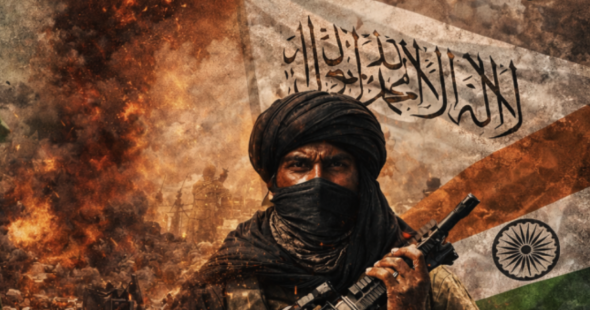
Why Pakistan Goes to War with the “Good Taliban”
Samir Mosaver Sonia Sekandari Before the tension between the Taliban and Pakistan flared up, Michael Kugelman, a leading expert on South Asia at the Atlantic Council, had warned that the crisis between the Taliban and …
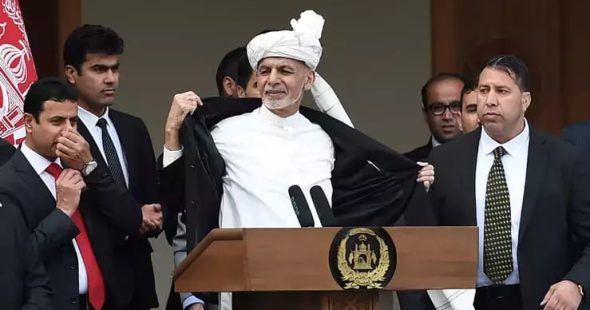
Ashraf Ghani opening his coat to demonstrate the absence of a bulletproof vest following nearby rocket explosions during his disputed presidential inauguration in Kabul. March 9, 2020. [WAKIL KOHSAR / AFP]
An Insider Account of the Fall of Peace Talks with the Taliban
The sudden collapse of the Islamic Republic of Afghanistan in August 2021 is frequently diagnosed as an unexpected military failure. However, an examination of the state’s internal administrative mechanics reveals a different reality: the collapse …
© American Institute of Afghanistan Studies
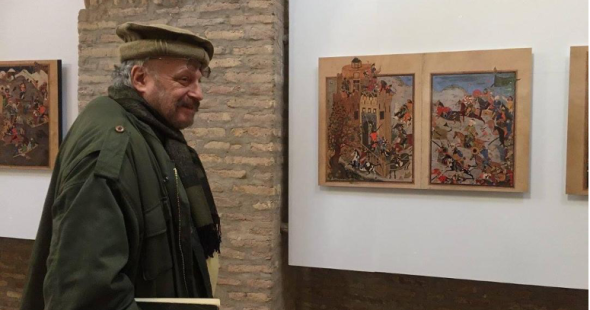
Pa Dwaro Stargo: A Tribute to Professor Michael Barry
In Spring 2018, when I officially enrolled at the American University of Afghanistan (AUAF), I immediately began searching for Professor Michael Barry, neglecting to register both for my credit and non-credit courses. Due to his …
Unity Is Overrated: Why the Anti-Taliban Coalition Must Be Built on Pluralism, Not Uniformity?
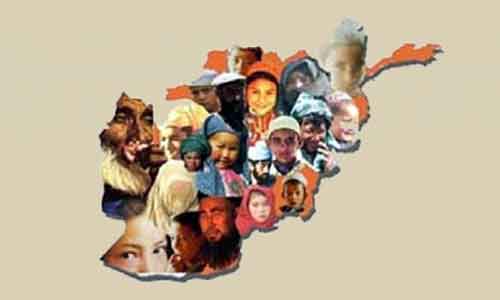
There is a persistent assumption in Afghanistan political discourse that unity is a prerequisite for defeating the Taliban. History, however, tells a different story. The Mujahideen did not defeat the Soviet Union and its proxy …

Illustration courtesy: Atena Soltani
The Taliban Gender Apartheid Regime Dismantles Social Cohesion in Afghanistan
Since the Taliban’s return to power in August 2021, Afghanistan has undergone a sweeping transformation of its public sphere, one that has systematically removed women from nearly every visible and participatory aspect of society. In …
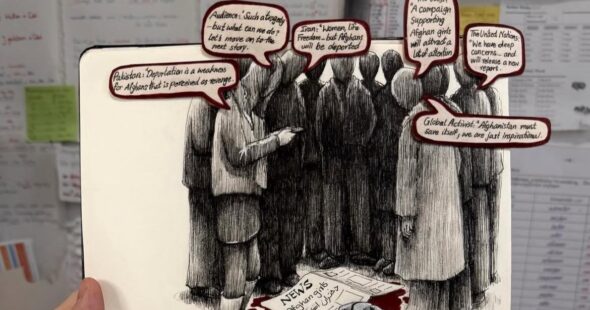
Illustration courtesy of Atena Soltani
Repackaging Oppression: Cheryl Benard’s Rhetoric and the Politics of Privilege
In May 2025, Cheryl Benard, a former RAND Corporation analyst and wife of Zalmay Khalilzad, a former US negotiator with the Taliban, penned down an article titled “Afghan Refugees Should Not Fear Repatriation,” in which …
Governing a Contentious City: Insights while Managing Kabul (2016-2019)
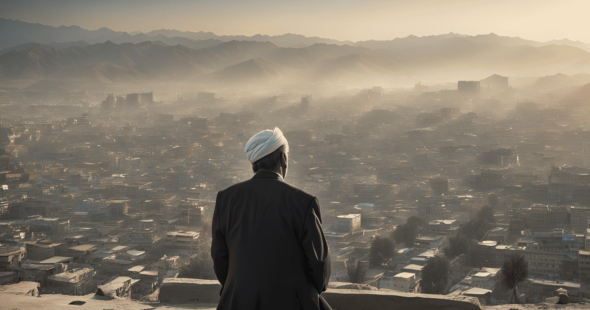
The tension across Kabul was peaking as the 2014 Presidential Election dispute continued into its third month with no outcome. The city’s blunt divisions along old fault lines reminded everyone of the early nineties as …
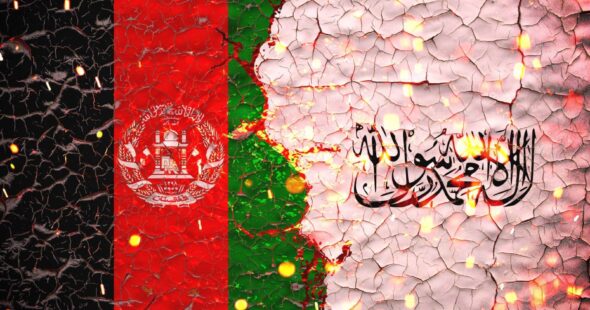
Why a Government in Exile is not Feasible for Afghanistan
Since the Taliban’s resurgence and subsequent takeover of Afghanistan in August 2021, the country has faced a significant decline in both its political and humanitarian landscapes. The U.S. withdrawal and the collapse of the Afghanistan …
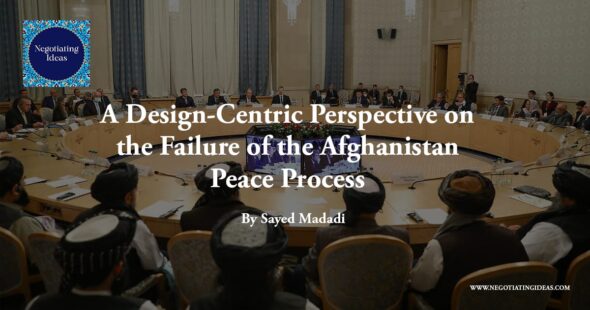
A design-centric Perspective on the Failure of the Afghanistan Peace Process
When Ambassador Zalmay Khalilzad embarked on his mission in September 2018 to end the American military engagement in Afghanistan, few people placed much hope in his efforts. Almost three years later, even fewer people could …